How does ChatGPT decide which businesses to recommend? OpenAI's announcement does not describe how it ranks businesses. What OpenAI has said and what the studies below found point the same way: ChatGPT's independent answers lean on what other sites say about you, and best-of lists are one of the largest sources it cites.
In November 2026, OpenAI launched Businesses in ChatGPT in beta. Through Business Hub, you can now claim a profile and manage your details. That helps. It does not replace the independent answer, and OpenAI's post does not say that claiming changes what ChatGPT recommends.
This post shows what you control, what ChatGPT reads, what five studies found about listicles, and how to get into the lists it reads.
How does ChatGPT decide which businesses to recommend?
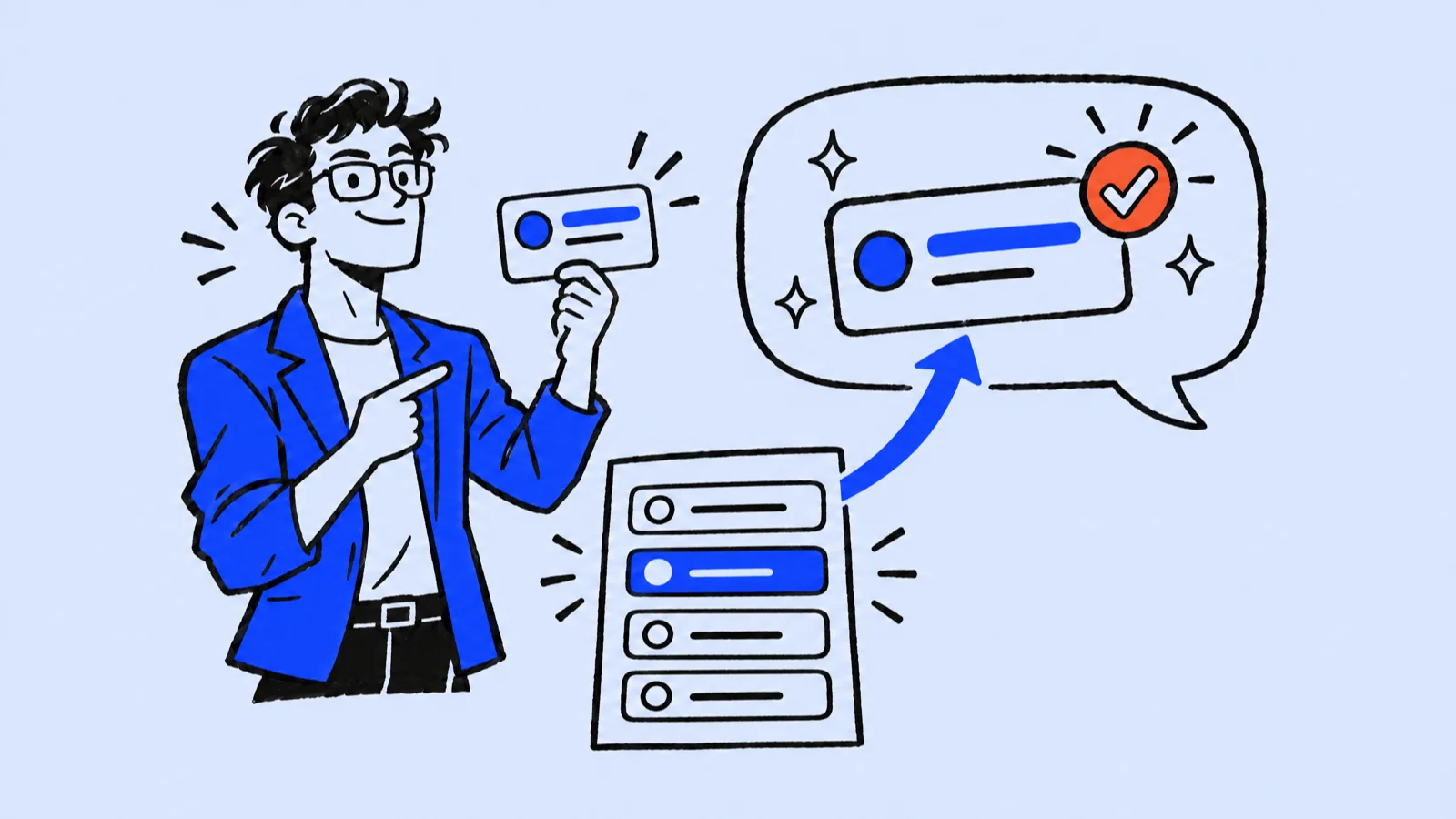
ChatGPT builds its independent answer from what it reads on the web, and the studies below show that this is mostly third-party pages, with best-of lists as the biggest group. OpenAI does not describe how it ranks businesses. Its announcement only separates ChatGPT's "independent answers" from anything a business controls.
Three kinds of input shape what a business looks like to ChatGPT:
- Pages about you. Best-of lists, reviews and comparisons written by other sites. These are third-party mentions, and they are what the citation studies measure.
- Your own site. OpenAI says Business Hub shows "discovery topics", described as common themes across conversations where your website is cited.
- Details you supply. Once verified, you can update key details and add product feeds with pricing and availability.
Only the first one is out of your hands. That is why it carries weight.
What did Business Hub change for businesses?
Business Hub gives you a profile you control inside ChatGPT. OpenAI describes it as a beta, available at chatgpt.com/business-hub, for any eligible business located where ChatGPT is available.
What OpenAI says you can do there:
- Claim your business and, once verified, update key details.
- Add self-service product feeds with pricing and availability.
- See aggregated insights: mentions, website clicks and discovery topics. These appear only when enough conversations meet privacy thresholds.
- Connect a Shopify store from Business Hub or the Shopify admin. OpenAI also says eligible Shopify products are already in ChatGPT through Shopify Catalog.
OpenAI also says that when a business appears in a model response, people can click through to its ChatGPT profile. The profile hangs off the response. You have to show up first.
Setup steps are a separate topic, covered in AY Rank's guide to claim your business in ChatGPT. Here is the part that matters for this post: OpenAI describes the profile as a way to give ChatGPT accurate details. It does not say claiming boosts how often you are recommended.
Why do third-party lists matter more after Business Hub?
Third-party lists matter more because everything a business can fill in or buy in ChatGPT is now labeled and kept apart from the independent answer. The one part you can neither write nor purchase is the part buyers read first.
OpenAI's post draws the lines clearly. A Business Agent conversation is "clearly labeled, separate from the customer's original ChatGPT conversation, and distinct from ChatGPT's independent answers." Sponsored placements, which use a sponsored Business Agent as the destination for ChatGPT Ads, are "clearly labeled and separate from ChatGPT responses." Business Agents are live for eligible ecommerce and online service businesses in the United States.
Here is how the pieces fit:
| Layer | Who controls it | What OpenAI says |
|---|---|---|
| Business profile in Business Hub | You, once verified | Update key details, add product feeds. People reach it by clicking from a response. |
| Business Agent | You | A labeled chat, separate from the original conversation. US ecommerce and online services only. |
| Sponsored placement | You, with budget | You can sponsor a Business Agent as the destination for ChatGPT Ads. Labeled and separate from ChatGPT responses. |
| Independent answer | ChatGPT | Distinct from the agent and from ads. The announcement does not say how businesses are chosen. |
| Third-party pages (lists, reviews, comparisons) | Other publishers | Not part of OpenAI's announcement. The studies below show how often they are cited. |
Read the table from the bottom. A profile, an agent and an ad all need someone to find you first. The independent answer is where that happens, and it reads pages you do not own.
Does ChatGPT use listicles? What five studies found
Yes, ChatGPT cites listicles, and so do the other AI engines. Five studies of AI citations land in the same place, though they measure different things.
| Study | Finding | Sample |
|---|---|---|
| Otterly | 66.6% of cited pages | 617,985 citations across 7 AI engines, September 2026 |
| Evertune via Search Engine Land | 63% of citations went to listicles | About 25,000 most-cited URLs and nearly 400 million citations across 6 AI surfaces, March and April 2026 (sponsored research) |
| Ahrefs | 43.8% of ChatGPT sources were "best X" lists | 26,283 source URLs from ChatGPT answers to 750 prompts |
| Wix Studio AI Search Lab via Search Engine Land | 40.9% of commercial citations | 75,000 AI answers and 1,056,727 citations across 3 AI models |
| Scrunch | Brand named in about 39% of answers that cite the brand's own listicle, against about 19% when they do not | About 10,000 AI-cited URLs across 7 AI surfaces, May 17 to June 30, 2026 |
The Ahrefs row is the one about ChatGPT alone. The others pool several engines.
Read these with care. Each study defines "listicle" and "citation" in its own way. They show that lists are cited often. They do not show that being on a list causes a recommendation, and Scrunch notes that AI systems change fast, so its numbers are a snapshot of that window.
Scrunch also looked at what engines do once they read a neutral comparison page. ChatGPT recommended a brand in 33.9% of those responses, which put it in the middle of the engines it tested. In the rest it did not pick a brand, so a plain mention is often the realistic result.
Why does ChatGPT mention my competitors and not my brand?
ChatGPT most likely names your competitors because more pages name them, and those pages are the ones it reads. You can check this quickly. Ask ChatGPT, Perplexity and Gemini the questions a buyer would ask, then open the pages they cite.
If your rivals show up on those pages and you do not, the gap is coverage, not your profile. A claimed Business Hub profile cannot close a gap in the independent answer, because OpenAI keeps the two apart.
Scrunch's data shows why your own site is a thin defense. When an AI answer cited a brand's own "best" page, another page backed that brand in only 1.4% of answers. Scrunch's summary: when your own listicle gets cited, it is usually the only thing vouching for you, while competitors may have independent coverage behind them.
How do you get into the lists ChatGPT reads?
You get into those lists by finding them, asking the publisher to include you, keeping the entry accurate and checking the result every month. Four steps, in order.
- Find the best-of lists in your category. Ask ChatGPT, Perplexity and Gemini "best [category] for [buyer]" questions. Write down the pages they cite, who owns each one, and which competitors appear. This is your target list.
- Get included editorially. Pick lists that fit your product and that a real publisher maintains. The site owner decides who goes on the list, so send accurate facts and a clear reason you fit. Listicle swaps are one route, where you list the host and the host lists you.
- Keep the entries accurate. Check price, features and positioning on each list against your own site and your Business Hub details. When you change pricing, ask the host to update the entry. A list that contradicts your profile gives ChatGPT two answers.
- Track mentions. Re-run the same buyer prompts every month. Use Business Hub's mentions, clicks and discovery topics once you are in the beta. Confirm that each list is still live and still names you. For the full tactics, see how to get cited by ChatGPT.
Where does AY Listicle fit?
AY Listicle is a network where SaaS companies get their product into "best of" lists that buyers and AI search read. You can request editorial inclusion in best-of lists that fit your product, using credits. Getting listed with credits explains how a spot is priced and booked.
The Starter plan is $79 a month and includes 400 credits, about four Standard inclusions a month. A listicle costs 50 to 400 credits, set by the site's DR (60%), the position on the list (25%) and the impressions (15%).
Our crawler checks every mention, and its text is checked monthly. A spot puts your product on a page buyers and AI search read. It does not guarantee a ChatGPT recommendation. Request a spot on AY Listicle when you have your target list from step 1.
FAQ
How do I make ChatGPT recommend my business?
You cannot make it, but you can raise the odds that it reads good things about you. Get accurate mentions on the best-of lists, reviews and comparison pages in your category, and keep your own site and Business Hub details current. OpenAI's announcement does not describe a ranking method, so no step is guaranteed.
Does ChatGPT use listicles to recommend products?
Yes, ChatGPT cites listicles often. Ahrefs found that 43.8% of the 26,283 source URLs in ChatGPT answers to 750 prompts were "best X" lists. Other studies of several engines put lists at 40.9% to 66.6% of citations, and none of them show that a list placement guarantees a recommendation.
Does claiming my business in Business Hub change what ChatGPT recommends?
OpenAI does not say that it does. Claiming lets you manage your details, add product feeds and see insights such as mentions, website clicks and discovery topics. The independent answer is kept separate from the profile, the Business Agent and sponsored placements.
Where does ChatGPT get its information about companies?
ChatGPT gets it from the pages it reads, and from details a verified business supplies in Business Hub. OpenAI says Business Hub lets you update key details and add product feeds with pricing and availability. The citation studies above show that third-party pages, best-of lists most of all, make up a large share of what AI answers cite.
Why does ChatGPT mention my competitors and not me?
The likeliest reason is that more pages name them. Ask ChatGPT, Perplexity and Gemini your buyers' questions and open the pages they cite. If rivals appear on those lists and you do not, ask the publishers for inclusion. Scrunch found that a brand's own listicle is usually the only page backing it, which is why independent coverage helps.
How long does it take to show up in AI answers?
No source gives a reliable timeline, so any fixed number would be a guess. A list has to be live and found before it can affect an answer, and Scrunch notes that AI systems change fast. Re-run the same buyer prompts every month and track the change.
Sources: OpenAI, Introducing Businesses in ChatGPT, Otterly, Evertune via Search Engine Land, Ahrefs, Wix Studio via Search Engine Land, Scrunch