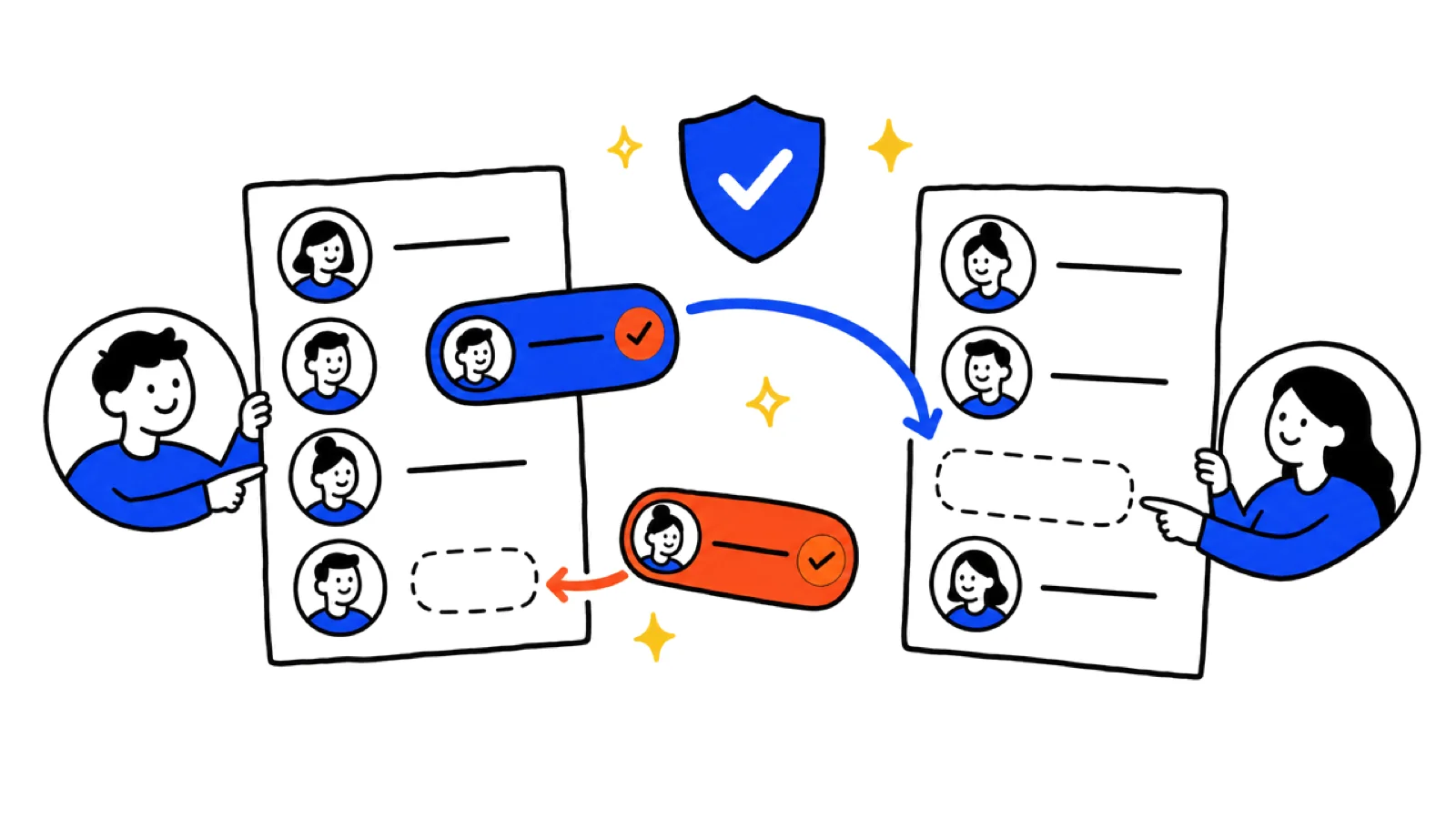
You secured a place in a best-of article, but you still need to know whether the product name, link and position remain intact. Listicle link tracking tools solve that monitoring problem, although different kinds of tools track very different signals. For most SaaS founders worried about a placement moving or disappearing, a dedicated listicle placement monitor is the most direct option.
This guide compares four workable approaches rather than ranking products without enough comparable evidence. A listicle link tracking tool is software or a repeatable workflow that checks whether a product mention and its link remain on a list page. The right choice depends on whether you need placement checks, visitor activity, general page changes or a low-cost manual record.
Why do people look for alternatives to ClickMeter?
People look beyond ClickMeter when their main question is not simply whether someone used a tracked link. They need to check what a publisher has written, where their product appears in the list and whether the placement remains live. A different tool may also suit a smaller portfolio or a process managed through publisher relationships.
Common questions include:
- Is our product still named on the page?
- Does the placement still link to the correct destination?
- Has the product moved to another position in the list?
- Did the publisher remove the mention?
- Who should follow up if the page changes?
- Are we tracking the placement itself or visits from it?
Those are separate monitoring jobs. A tracked URL can help you study activity around that URL, but it does not by itself create a record of the surrounding list entry. Conversely, a placement checker may confirm that a mention remains present without telling you what visitors do after they follow the link.
This distinction matters because the phrase "link tracking" can describe several different tasks. Define the event you care about before comparing interfaces or plans. Otherwise, you may buy a tool that records the wrong signal accurately.
| Option | What it does | Best for | Pricing basis | How it differs from ClickMeter |
|---|---|---|---|---|
| Dedicated listicle placement monitoring | Checks the product name, destination link and list position on publisher pages | SaaS teams maintaining best-of placements | Varies by service. AY Listicle pricing is not published in the available product information | Focuses on the placement and surrounding page rather than only the tracked destination |
| General click tracking | Uses trackable links to record activity associated with those links | Teams whose main question is whether a specific tracked link receives activity | Varies by provider | Focuses on tracked-link activity rather than confirming the full list entry |
| General page change monitoring | Watches a page or selected part of it for edits | Teams that need broad change alerts across publisher pages | Varies by provider | Detects page changes, but may require you to decide whether each change affects your placement |
| Spreadsheet and scheduled review | Records placements and assigns people to inspect them on a schedule | Small portfolios and teams testing a process before adopting software | Staff time and any existing workspace costs | Uses manual inspection rather than automated link or placement checks |
The table compares approaches, not like-for-like products. No named ranking is presented because there are not enough confirmed alternatives with comparable product details. AY Listicle appears where its documented placement checks match the stated criteria.
When should you use dedicated listicle placement monitoring?
Use dedicated placement monitoring when the list entry itself is the asset you need to protect. This approach fits teams that care about the product name, its destination link and its position within a best-of page. It reduces the gap between the question you ask and the item the system checks.
<figure class="video"><figcaption>Listicle Link Building For Creating Consensus in LLMs and AI Overview (James Dooley ft Jabez Reuben)</figcaption></figure>
AY Listicle's listicle mention platform lets founders submit a product and a list they own. Users can swap mentions with other list hosts, use credits to request placements, or host a list and earn credits. Its crawler checks placements, and pages are checked again each month, according to AY Listicle.
AY Listicle checks a listing for the product name, link and position. It also alerts users if a mention moves or disappears, according to AY Listicle. Those checks make it relevant when your goal is to maintain evidence that an agreed placement remains in place.
A dedicated monitor is a narrower choice than a general marketing analytics system. It cannot replace your web analytics, attribution setup or sales reporting. A monthly check also may not suit a placement that needs inspection more often than that.
Choose this kind of option when:
- Each publisher page has continuing value to your acquisition or brand work.
- Position within the list matters to your agreement or review process.
- You need an alert when a mention moves or disappears.
- Your team wants the placement request and later monitoring in one workflow.
Stay with ClickMeter if it already answers your actual question and you do not need to verify the surrounding list entry. Adding another system creates another record to maintain. A dedicated placement monitor earns its place only when page-level verification changes what your team does.
The video below shows how listicle link building can relate to consensus in large language model answers and AI Overviews.
When does general click tracking make more sense?
Choose general click tracking when your main concern is activity associated with a trackable link, rather than the wording and position of the list entry. It can fit campaigns where you control the destination setup and need a consistent link workflow across several channels. It is less direct for proving that a publisher preserved a particular placement.
Start by writing the question that will trigger action. If the question is "Did this tracked link receive activity?", click tracking is aligned with the job. If the question is "Does this article still list us in the agreed position?", you need to inspect the source page as well.
A general link tracker also depends on the publisher using the link you expect. If a publisher replaces it, removes tracking parameters or links to another page, your report and the live article can diverge. A scheduled visual or crawler-based check can catch that gap.
Use this route when:
- Link activity is the main decision signal.
- You use tracked links across more than listicles.
- Placement position does not affect your follow-up.
- Someone already reviews the publisher page separately.
Stay with ClickMeter when your existing setup covers these needs and changing tools would only recreate the same workflow. Do not switch because a product has a longer feature list. Switch when it records a signal you currently lack or removes a manual step that regularly causes missed follow-up.
When is page change monitoring enough?
Page change monitoring can work when you need to know that a publisher edited a page and are willing to review the change yourself. It is useful for mixed content portfolios because the same process can watch pages that are not listicles. Its main limit is that an alert may not explain whether your own placement was affected.
A broad page monitor and a listicle placement monitor answer related but different questions. The broad monitor asks whether selected content changed. The placement monitor asks whether a named product, link or position still matches the record.
That difference affects alert quality. A publisher might edit an introduction, replace an image or update another entry while leaving your mention untouched. A broad change alert may still require a person to open the page, locate the product and compare it with the agreement.
This approach is a reasonable fit when:
- You watch many kinds of publisher pages.
- A person is available to classify each change.
- You need notice of edits beyond your own entry.
- Your placement records already live somewhere else.
Its limit is operational rather than conceptual. Alerts only help when someone owns the review and follow-up. If responsibility is unclear, notifications can accumulate without protecting the placement.
Stay with ClickMeter if page edits do not matter to your objective. If you only need activity associated with a tracked link, broad page monitoring adds noise. Combine approaches only when each one supports a distinct decision.
When is a spreadsheet and scheduled review sufficient?
A spreadsheet is sufficient when you have few placements, changes are infrequent and one person can inspect every page on a dependable schedule. It gives you control over the fields and follow-up process without introducing another product. The trade-off is staff time, inconsistent checks and limited automatic detection.
A useful record can include the publisher page, product name, expected destination, agreed position, placement date, review owner and last inspection date. These fields describe what a reviewer needs to compare. Avoid collecting information that never affects a decision.
The review process matters more than decorative formatting. Assign an owner and define what counts as a problem. For example, your process can distinguish a removed mention from a changed link or a lower list position, then route each case to the right publisher contact.
Manual review fits when:
- You are testing whether placement monitoring deserves a budget.
- The number of pages remains manageable for one owner.
- Each page needs human judgment.
- Your team already works from a shared placement register.
The weakness appears as the portfolio grows. Reviews take time, dates can be missed and evidence may become inconsistent across team members. A spreadsheet also does not inspect a page unless a person opens it and performs the check.
Stay with ClickMeter if the tracked-link data already supports your decisions and manual placement checks are rare. Use the spreadsheet as a supplement when you need a simple publisher register. Replace it only when repeated reviews take enough time or missed changes create enough risk to justify automation.
How to choose
Choose by matching the tool to the event that should trigger action. Start with the placement, not a software category. Then decide how often it needs checking, how much human review is acceptable and where publisher follow-up should be recorded.
Decide what must be verified
Write one plain sentence that defines success. "Confirm that our product name, link and position remain on the page" points toward dedicated placement monitoring. "Measure activity associated with our campaign link" points toward general click tracking.
If you need both, keep the records connected through a shared placement identifier or page URL. Do not treat one signal as proof of the other. A live placement can receive little activity, while recorded link activity does not prove the current page still contains the agreed entry.
Set the review frequency
Match the schedule to the consequence of a change. AY Listicle rechecks pages monthly, according to its product information. That schedule can fit ongoing placement maintenance, but it cannot provide immediate notice of every edit.
If a placement needs more frequent review, choose a process that supports that requirement or add a manual check around important dates. State the schedule before buying a tool. "Automatic monitoring" has little meaning unless the interval suits your work.
Assign ownership before adding alerts
Every alert needs an owner and a next step. Decide who checks the evidence, contacts the publisher and records the resolution. A tool can identify a possible problem, but it cannot repair a publisher relationship on its own.
Use a short status set so the record remains clear:
- Active
- Changed
- Follow-up due
- Resolved
Test the smallest workable process
Begin with a small group of representative pages. Include a stable placement and a page that changes more often. Check whether the process identifies the conditions your team cares about without producing more review work than it removes.
If you need placement requests, reciprocal swaps, credit-based placements and monthly listing checks in one system, review AY Listicle against your own pages and monitoring schedule. Assess it by the same criteria as any other option.
FAQ
What are listicle link tracking tools?
Listicle link tracking tools are software or repeatable workflows used to check product mentions and links on list-based publisher pages. Depending on the option, they may focus on the live placement, activity associated with a tracked link, general page edits or scheduled manual inspection.
How are listicle link tracking tools different from click trackers?
Listicle placement tools inspect the publisher page, while click trackers focus on activity associated with a trackable link. If you need to confirm the product name, destination and list position, click data alone does not answer the full question.
What should I track for a best-of list placement?
Track the publisher page, product name, destination link, expected position, review owner and last check. Add only fields that guide a decision or publisher follow-up.
Can a link tracker tell me if my product moved down a list?
A link tracker cannot be assumed to detect list position unless that feature is explicitly part of its page-checking process. Use a placement monitor that checks position, or inspect the page manually on a defined schedule.
How often should listicle placements be checked?
Check placements on a schedule that matches the consequence of a removal or change. AY Listicle rechecks pages monthly, according to its product information, while time-sensitive placements may need an additional manual process.
Is a spreadsheet enough for tracking listicle links?
A spreadsheet can be enough for a small portfolio with a clear owner and dependable review schedule. It becomes less suitable when checks are missed, records differ between reviewers or the number of pages makes manual inspection too costly.
Should I replace ClickMeter with a listicle placement tool?
Replace or supplement ClickMeter only if you need a signal your current process does not capture, such as the product name, destination and position on the publisher page. Stay with your current setup when tracked-link activity is the main signal and it already supports your decisions.
Does AY Listicle track clicks from publisher pages?
AY Listicle's documented checks cover the product name, link and position, with monthly rechecks and alerts when a mention moves or disappears. Click reporting is not described in the published product information, so use separate analytics when you need visitor or conversion data.
If placement verification is the missing part of your process, compare your current workflow with AY Listicle's monthly checks before moving the full portfolio.
Sources
- AY Listicle platform and placement monitoring
- Listicle Link Building For Creating Consensus in LLMs and AI Overview, James Dooley
Last checked: 2026-11-14